
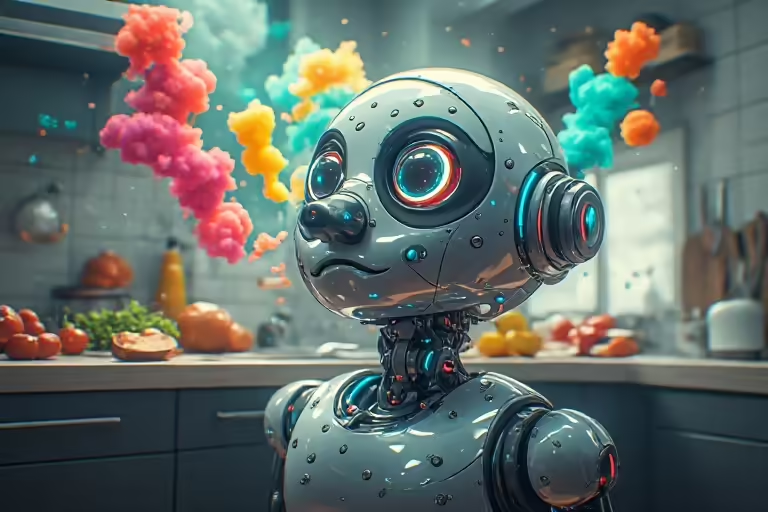
Sensory AI is Sniffing Out the Future
Table of Contents
Sensory AI: Why Your Robot Wants to Smell You
Ever wondered if your vacuum cleaner thinks your lounge room smells a bit funky? Well, thanks to MUI Robotics, a deeptech startup from Thailand, that reality is closer than you think. They are currently pioneering a sensory artificial intelligence (AI) platform that digitises smell and taste, turning these complex human senses into actionable data.
While most AI systems today are great at seeing (computer vision) and hearing (natural language processing), they’ve been relatively “nose-blind” until now. MUI Robotics believes that sensory data is the untapped layer of the AI economy. By teaching machines to sniff out details, we can create systems that understand the physical world with far more nuance than ever before.
The Three Eras of AI Evolution
According to the team at MUI, we’ve moved through two major phases of AI already. First came the “Pattern Era”, where machines could recognise your face at the airport but didn’t really know who you were. Then we hit the “Reasoning Phase”—the current era where AI can chat, plan, and help you write reports.
We are now entering the third phase: Emotional Perception. This is where AI starts to mimic living beings by developing perceptual understanding. To get there, robots need more than just code; they need to interact with the chemical world. This means interdisciplinary collaboration across technology, behavioural sciences, and even the humanities.
Real-World Sniffing Applications
So, what do we actually do with a robot that has a nose? The applications are surprisingly practical. In the food industry, sensory AI can determine product quality or even simulate tastes virtually, which drastically reduces the time needed for food innovation. Instead of physical testing every single batch, a digital “tongue” can do the heavy lifting.
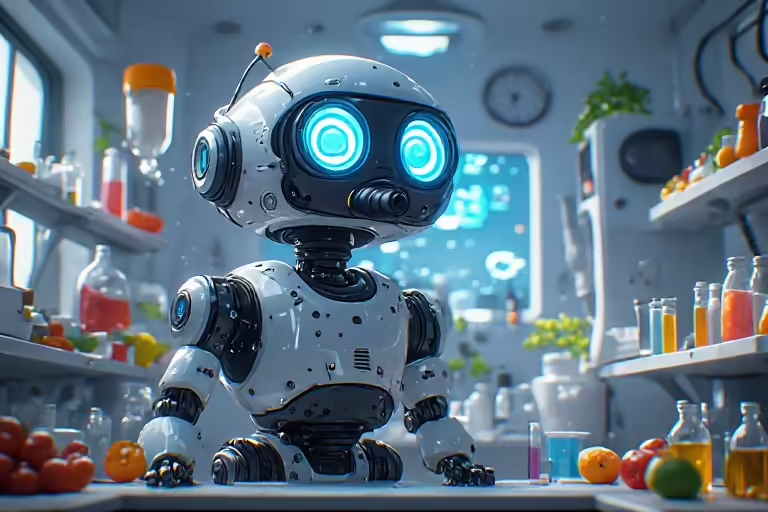
Beyond the kitchen, this technology is being deployed for environmental management. Sensors can monitor odour pollution in industrial zones, helping factories reduce their impact on local communities. In healthcare, there’s even potential for AI to detect diseases simply by “smelling” a patient’s breath, using specific odours as biological markers.
Thailand’s Growing AI Market
The Thai AI market is currently expanding at a cracking pace of 30% annually, with projections reaching 50 billion baht by 2026. MUI Robotics has already spent five years collecting over 200 million data points related to food and scent. Their goal? To scale this to hundreds of billions of data points and set the global standard for sensory intelligence.
While the market is competitive, specialised talent in Thailand is focusing on these niche, high-impact areas. By digitising the senses, local entrepreneurs are finding a unique competitive advantage that allows businesses to understand the real world more deeply than their global rivals.
Conclusion
Sensory AI is no longer science fiction. As we bridge the gap between digital logic and physical sensation, our machines are becoming more human-like in how they perceive their surroundings. Whether it’s ensuring your morning coffee tastes perfect or detecting pollution before it becomes a problem, the future of AI smells pretty interesting.
Find Out More

Acute Runtime Anxiety
They took a powerful AI language model, put it inside a robot, and let it loose in the real world. The results? Sometimes helpful, sometimes hilarious, and always unpredictable.


Trending Articles

Most Downloaded Apps in 2026 & The Best Alternatives to Try
2026 Euki Review: Privacy-First Reproductive Health Tracking
2026 Grist Review: The Evolution of Relational Spreadsheets

2026 AliExpress Review: Global Value in a Digital Marketplace
2026 Loops Review: The Privacy-First Social Media Alternative
2026 Lumo Review: The Privacy-First AI Revolution

Get Online Security Tips, Guides & News – Straight to your Inbox 📥
By clicking Submit you confirm that you are 16 years of age or older and you agree to our Terms of Use and Privacy Policy. You may unsubscribe at any time.