
2026 Signal Review: Trusted Private Messaging App
Signal is a free messaging app known for its strong privacy and security focus. Moreover, it uses end-to-end encryption based on the open-source Signal Protocol. This encryption keeps your messages, calls, and shared media private and accessible only to intended recipients. Consequently, Signal does not collect metadata about your communications and never stores your conversations on its servers. Additionally, you can use the app on Android, iOS, Windows, macOS, and Linux for seamless communication. Furthermore, Signal is open-source and regularly audited, so privacy experts worldwide trust its transparent security features.
Key Features
Communication Options
- Text Messaging: Send texts, voice messages, photos, videos, GIFs, and files.
- Voice and Video Calls: Make encrypted voice and video calls with high clarity.
- Group Chats: Create group chats with up to 1,000 participants and support for group calls with up to 50 people.
Privacy and Security
- End-to-End Encryption: Signal encrypts all communications so only the sender and receiver can read the messages.
- Minimal Data Collection: Signal requires only your phone number to create an account, and it does not collect additional personal data.
- Open Source: The app’s code is publicly available, allowing for transparency and independent audits.
User Experience
Signal features a user-friendly interface that is smooth and easy to navigate. However, some users report occasional bugs, such as problems with notifications for incoming calls.
Pros and Cons
Pros
- Strong Privacy Features: Signal employs end-to-end encryption by default, meaning that only the sender and recipient can read the messages.
- Open Source: The app’s code is publicly available, allowing for independent audits and transparency regarding its security practices.
- No Data Collection: Signal collects minimal user data, primarily just the phone number needed for account creation. Furthermore, it does not store messages or share data with third parties.
- Group Messaging and Calls: Users can create group chats with up to 1,000 participants and make voice/video calls with up to 50 people.
- Self-Destructing Messages: Signal allows users to send messages that can automatically delete after a set time.
Cons
- Phone Number Requirement: Users must provide a phone number to create an account, which may deter those seeking complete anonymity.
- Limited Discoverability: Users cannot search for groups; they must be invited via a link, which can limit community engagement.
- Dependency on Internet Connection: Signal requires an internet connection for all communications, which may not be ideal in areas with poor connectivity.
- Occasional Bugs: Some users report issues with notifications and call functionality, which can affect usability.
- Not Fully Anonymous: While Signal protects message content, it does not hide the fact that messages are being sent, which could be a concern for some users.
Conclusion
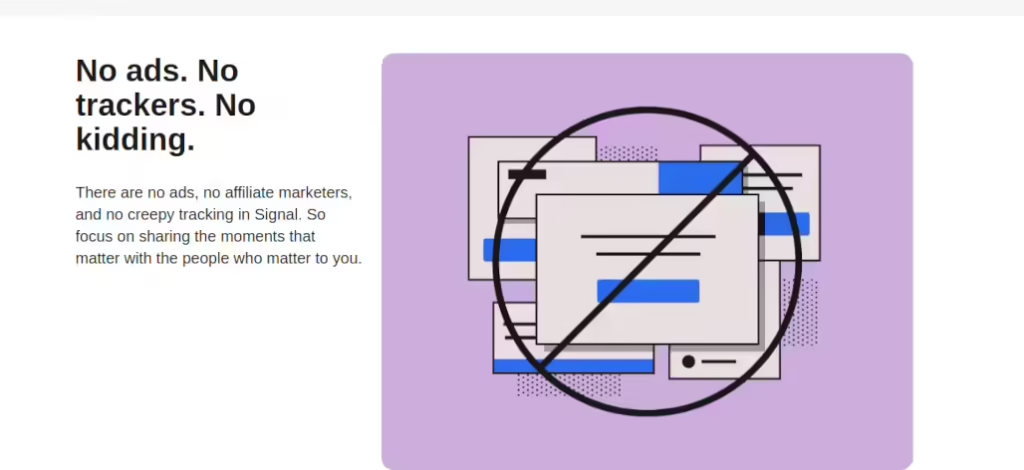
In summary, Signal is highly regarded as one of the most secure messaging apps available. Its commitment to privacy, lack of ads, and open-source nature make it a strong choice for users seeking secure communication. However, as a phone number is required to create an account, this ultimately compromises complete anonymity.

Trending Categories
Latest Articles

The Top 5 Privacy Browsers in 2026

2026 Tor Browser Review
2026 Zen Browser Review
2026 DuckDuckGo Browser Review
2026 Mullvad Browser Review
2026 LibreWolf Browser Review
By clicking Submit you confirm that you are 16 years of age or older and you agree to our Terms of Use and Privacy Policy. You may unsubscribe at any time.